Who Pays for NATO?
The alliance works best when every member carries its share. Here is where things stand.
The Society supports NATO on one condition: that it adds to American power instead of drawing it down. The plainest measure of that is whether allies spend what they promised on their own defense.
In 2014 every member pledged to reach 2 percent of GDP on defense within a decade. By 2024, by NATO's own estimates, 23 of 32 members had done it, a big improvement. Several large economies still had not.
In 2025 members agreed to a new target of 5% of GDP by 2035.
View as table
| Share of GDP, 2024 estimates. Selected members. | |
|---|---|
| Poland | 4.12% |
| Estonia | 3.43% |
| United States | 3.38% |
| Greece | 3.08% |
| United Kingdom | 2.33% |
| Germany | 2.12% |
| France | 2.06% |
| Netherlands | 2.05% |
| Italy | 1.49% |
| Canada | 1.37% |
| Belgium | 1.30% |
| Spain | 1.28% |
At the 2025 summit in The Hague, members agreed to a new target of 5 percent of GDP by 2035, with 3.5 percent for core defense. That is the right direction. The test is whether the money actually gets spent.
- Publish an annual scorecard of every ally against the Hague commitment.
- Tie American force posture and basing decisions to allies meeting their share.
- Push European members to take the lead on Europe's conventional defense, so American forces can focus on the Pacific and our own hemisphere.
More from the Journal
All entries
More Than a Creed: Who Americans Are
A list of ideals can't make a nation. A real, recognizable American people can, and it has always grown.

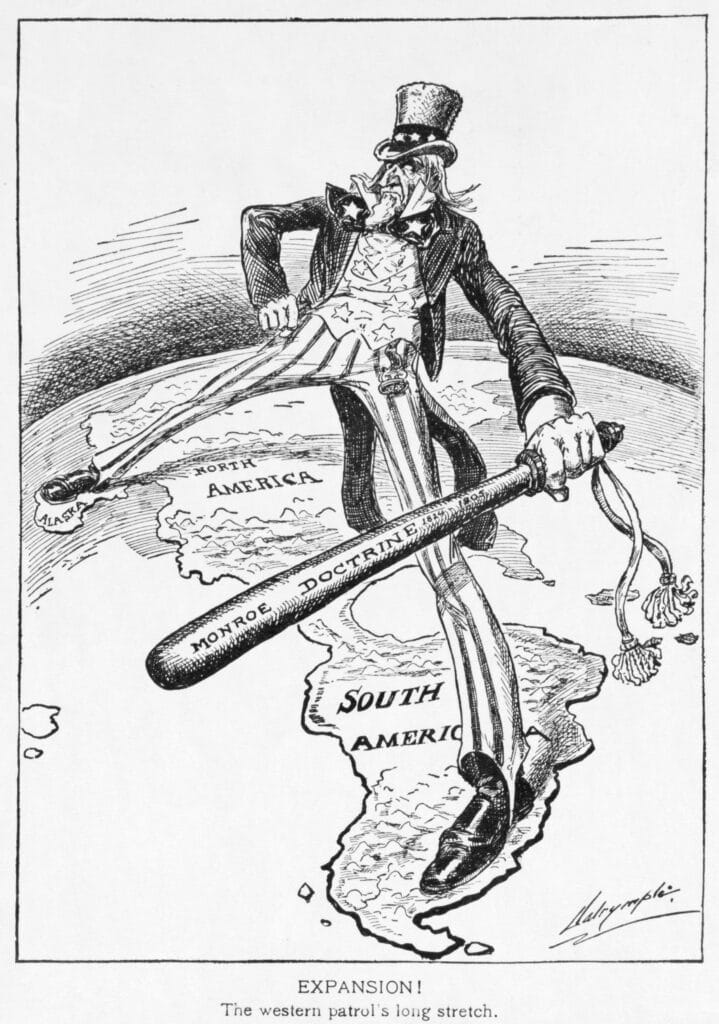
Why We Started the Monroe Society
Our founding statement: what we believe, why we chose Monroe's name, and where we go from here.
The Hemisphere Comes First
Why removing Maduro made America stronger, and why a war in Iran does the opposite.